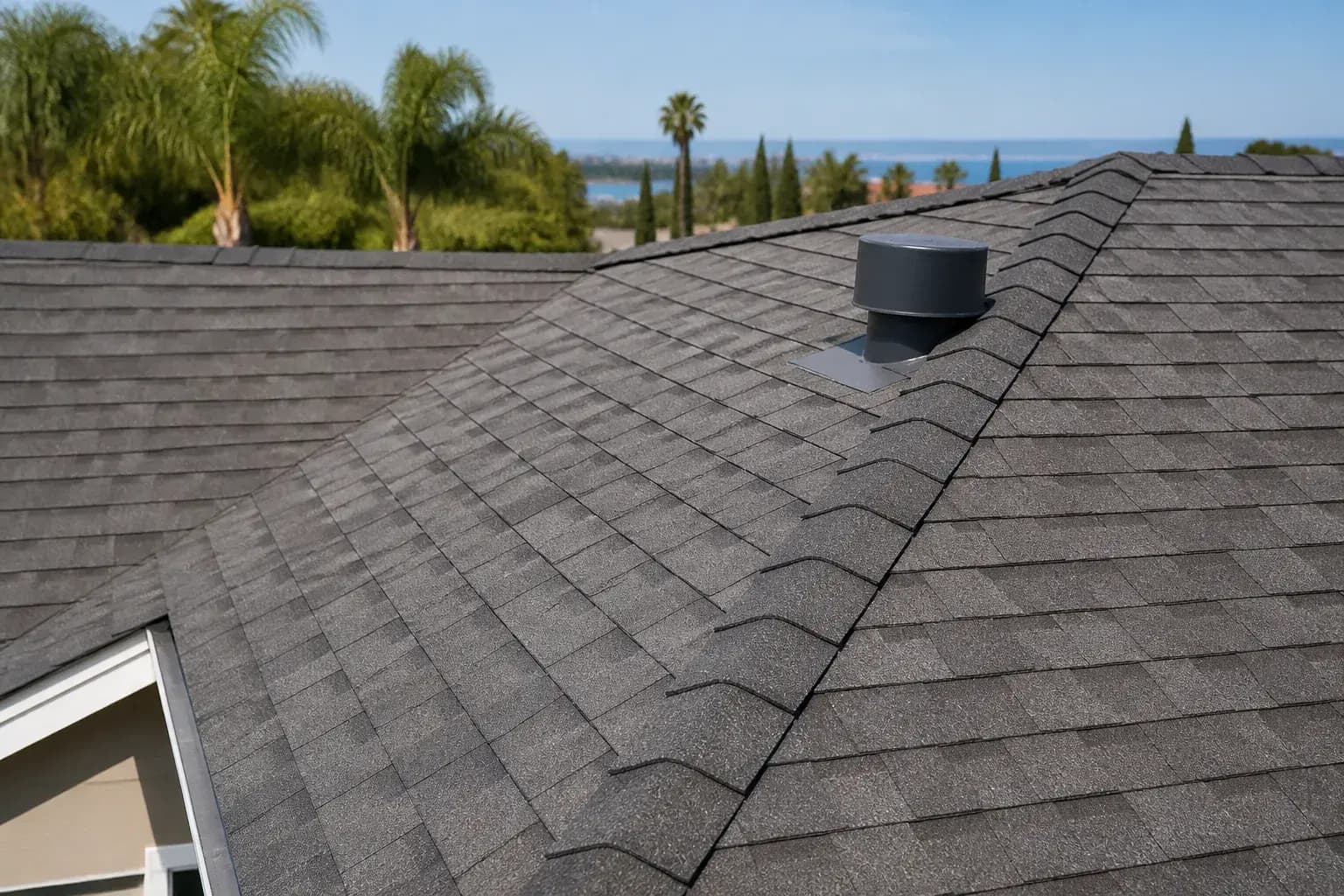
Roof Replacement in San Diego, CA
A worn-out roof can lead to repeated leaks, rising damage, and bigger problems.
When a roof starts shedding granules, showing soft spots, or letting stains appear on ceilings, the problem usually does not stay small for long. A few repairs may buy time, but repeated leaks, visible wear, and rising concerns about what is happening under the surface often point to a roof that is nearing the end of its useful life.
If that sounds familiar, the next step is straightforward: get a clear replacement plan before the damage spreads into framing, insulation, or interior finishes. Harbor View Roofing helps homeowners in San Diego evaluate the condition of the roof above them and move from uncertainty to a practical replacement process that fits the home, the structure, and the way the roof is actually performing.
Warning signs
Some roofs fail slowly, while others make the need for replacement obvious. What matters is noticing the pattern before the small issues become expensive interior repairs.
- Repeated leaks: If water keeps returning in different places after patching, the roof may no longer be sealing reliably.
- Curling or missing shingles: When shingles lift, crack, or disappear, the roof loses its protective layer and becomes more vulnerable to water entry.
- Granule loss: Bald spots or piles of granules in gutters often show that the surface is wearing out.
- Sagging areas: A roofline that looks uneven can signal deeper structural concerns that should be addressed quickly.
- Interior staining: Ceiling marks, peeling paint, or damp attic materials often mean water has already made its way inside.
These signs do not always mean every part of the roof has failed, but they do mean the system needs attention. A replacement discussion is often the next sensible step when the roof can no longer keep up with the home’s needs.
What replacement solves
A roof replacement is not just about covering a house again. It is about stopping recurring problems at the source and giving the home a fresh surface that can better handle daily exposure.
- Stops recurring leaks: A new roof can eliminate the cycle of patching the same trouble spots over and over.
- Protects the structure: Water intrusion can affect decking, framing, and insulation, so replacing a failing roof helps limit hidden damage.
- Improves exterior consistency: A full replacement removes the uneven look that often comes with old repairs, missing shingles, and mismatched patches.
- Simplifies future upkeep: Once the roof is no longer in decline, it becomes easier to spot new issues before they spread.
For many homeowners, replacement also brings clarity. Instead of wondering whether the next storm or season will expose another weak point, you know the roof has been reset with a new protective layer.
Common causes
Not every replacement happens for the same reason. Often, a roof reaches the point of replacement because several smaller issues have been working together for years.
Age and wear
Materials break down over time, especially where sunlight, moisture, and day-to-day exposure have taken their toll. Even a roof that once performed well will eventually show its age through brittle shingles, fading, and weaker seals.
Past patchwork
Repairs can help for a while, but a roof with too many patches may no longer have a uniform surface. When one area is fixed only for another to fail soon after, replacement may be the more sensible long-term solution.
Water intrusion
A roof does not have to leak dramatically to be in trouble. Slow seepage can weaken underlayment, decking, and insulation long before the signs become obvious indoors.
Poor drainage or standing debris
When water sits in places it should not, it can speed up material breakdown. Heavy buildup in valleys, around edges, or near penetration points can shorten a roof’s usable life.
Harbor View Roofing looks at these patterns as a whole, because a roof usually fails for more than one reason at a time.
Our replacement process
A replacement project should feel organized, not confusing. We keep the process focused on clear communication and the condition of the roof itself.
1. Roof review
We start by looking at the visible condition of the roof and identifying the issues that point toward replacement rather than another repair. This helps set expectations early and avoids guesswork.
2. Material planning
Next, we help determine the right replacement approach for the home. The goal is to match the new roof to the structure and the existing conditions, not force a one-size-fits-all answer.
3. Removal and preparation
Before new materials go on, the old roofing needs to come off and the surface underneath needs to be ready. This step matters because a roof is only as sound as the base beneath it.
4. Installation and final check
Once the new roof is in place, we verify that the finished surface is secure, aligned, and ready to do its job. A careful finish matters just as much as the visible outer layer.
This process is designed to reduce surprises and keep the project moving in a clear, practical order.
Why timing matters
Waiting too long to replace a failing roof can turn a roofing project into a broader home repair problem. Water intrusion does not stay near the surface. It can move into insulation, stain finishes, and weaken materials that are harder to see.
For a homeowner in San Diego, that means the decision is not just about the roof’s appearance. It is about preventing repeated disruption inside the home and avoiding the frustration of chasing one leak after another. A roof that has reached the end of its serviceable life often creates more uncertainty than a planned replacement ever will.
If your roof has already required multiple fixes, or if the visible wear keeps getting worse, replacement usually deserves serious consideration rather than one more temporary patch.
What to prepare
A little preparation helps the replacement move smoothly and makes the day less disruptive.
- Clear access: Move vehicles, patio items, and anything fragile away from work areas so the crew has room to operate safely.
- Protect interiors: If leaks have already affected ceilings or attic spaces, it helps to document the damage before work begins.
- Plan for noise: Roof replacement is a hands-on project, so it helps to know the home will be active during the work.
- Keep pets secure: A busy work area is not a place for pets to wander, so a calm indoor or off-site plan is useful.
Harbor View Roofing will walk through the practical side of the job so you know what is happening and what the home needs before the work starts.
Choosing replacement wisely
A roof replacement is a major exterior decision, so it helps to focus on how the roof will perform on the house you actually live in.
Material fit
Different roofing materials handle wear in different ways, and the right choice depends on the condition of the home, the roof’s design, and the replacement goals.
Roof shape
Slope, valleys, edges, and penetrations all affect how a replacement should be planned. A roof with more transitions needs careful detailing in those areas.
Interior concerns
If the home already shows stains, moisture, or attic issues, those conditions should be considered before the new roof goes on so the replacement addresses the full picture.
We help homeowners weigh these factors without overcomplicating the conversation, so the decision stays grounded in the home’s actual needs.
Common questions
How do I know if I need replacement instead of another repair?
If the same leaks keep returning, the roof surface is breaking down in multiple areas, or the damage keeps spreading, replacement is usually worth discussing.
Will a replacement fix interior stains too?
It can stop the water source that caused them, but existing stains or damaged drywall may still need separate interior attention.
How disruptive is the project?
There will be noise, activity, and access needs around the home, but the work is handled in a clear sequence so you know what to expect.
What if only part of the roof looks worn?
A roof can have hidden trouble beneath the visible surface, so a partial look is not always enough to judge the full condition.
Can replacement help with recurring patch problems?
Yes. If patching has become a repeated cycle, replacement can resolve the underlying decline instead of treating one spot at a time.
How soon should I act after noticing leaks?
The sooner you address it, the better. Even small leaks can spread into areas that are harder and more expensive to repair later.
Get started
If your roof is showing the kind of wear that keeps coming back, Harbor View Roofing can help you move forward with a replacement plan that makes sense for your home. A roof replacement should bring relief, not more uncertainty, and it starts with knowing when repairs are no longer enough.
For homeowners in San Diego, the most useful next step is a direct conversation about what the roof is doing now and what it needs next. We can help you make that decision with practical guidance and a clear path from the first signs of trouble to a roof that is ready to protect the home again.
How We Work
A Clear Roofing Process
Every project starts with a careful look at the roof and a simple explanation of what comes next.
Inspect the Roof
We examine the roof surface, flashing, and likely trouble spots before recommending work.
Explain Your Options
You get a clear breakdown of what we found and which next step fits the situation.
Complete the Work
We finish the roofing project carefully and leave the site clean.
FAQ
Common Roofing Questions
If you have questions about your roof or next steps for a project, send us a message and we will help you sort through the options.
How do I know if my roof needs repair or replacement?
An inspection is the best place to start. We look at the condition of the roof and explain which option makes more sense.
What are signs my roof may be leaking?
Water stains, damp ceilings, missing shingles, and cracked flashing can all point to a roof issue.
Do you inspect roofs before starting work?
Yes, a careful inspection helps identify the source of the problem and the right scope of work.
Can you help with flat roofs?
Yes, flat roofing is one of the services we offer for local properties.
What types of properties do you work on?
We help homeowners, property managers, and business owners with roofing projects across San Diego.

Get started
Talk With a Roofing Team You Can Rely On
Tell us what is happening with your roof, and we will help you determine the right next step for repair, replacement, inspection, or maintenance.