Leak Detection in San Diego, CA
Persistent moisture often points to a roof problem that needs a focused search.
A ceiling spot that grows after a storm, paint that blisters near the wall line, or a musty smell in one room can all point to a roof leak that has already moved past the first warning sign. Water does not always drip straight down, so the visible damage often shows up far from the actual opening in the roof, which makes the problem hard to track without a careful search.
If you are noticing wet drywall, a damp attic space, or stains that return after you think they were handled, it is time to narrow down the source instead of guessing. Harbor View Roofing helps homeowners in San Diego identify where water is getting in and what path it is taking so the next repair is focused on the real issue, not just the symptom.
Warning signs
A leak rarely announces itself with one obvious drip. More often, it leaves a trail of subtle clues that can be easy to dismiss until the damage becomes harder to ignore.
- Ceiling stains: Brown rings, dark patches, or paint that bubbles often mean water has already traveled through the roofing layers.
- Wall discoloration: Streaks near the top of a wall can point to runoff that is entering above the visible damage.
- Attic moisture: Damp insulation, staining on framing, or a musty smell can show that water is reaching the structure before it appears indoors.
- Dripping sounds: A faint drip after rainfall can reveal an active entry point even when no water is visible on the floor.
- Repeated spots: A stain that keeps coming back after being dried out usually means the source was never found.
When you see more than one of these signs, it is worth treating the problem as active until proven otherwise. The sooner the source is narrowed down, the less chance there is for hidden wood, insulation, and interior finishes to take on damage.
Common causes
Roof leaks are often blamed on a single broken shingle or a random hole, but the path water follows is usually more complicated. In many homes, the entry point and the damage point are several feet apart.
- Flashing gaps: Metal transitions around roof features can open up over time, creating a small gap that lets water work its way underneath surrounding materials.
- Material wear: Roofing surfaces can age unevenly, and a small crack or lifted edge may only show itself when water finds the right angle.
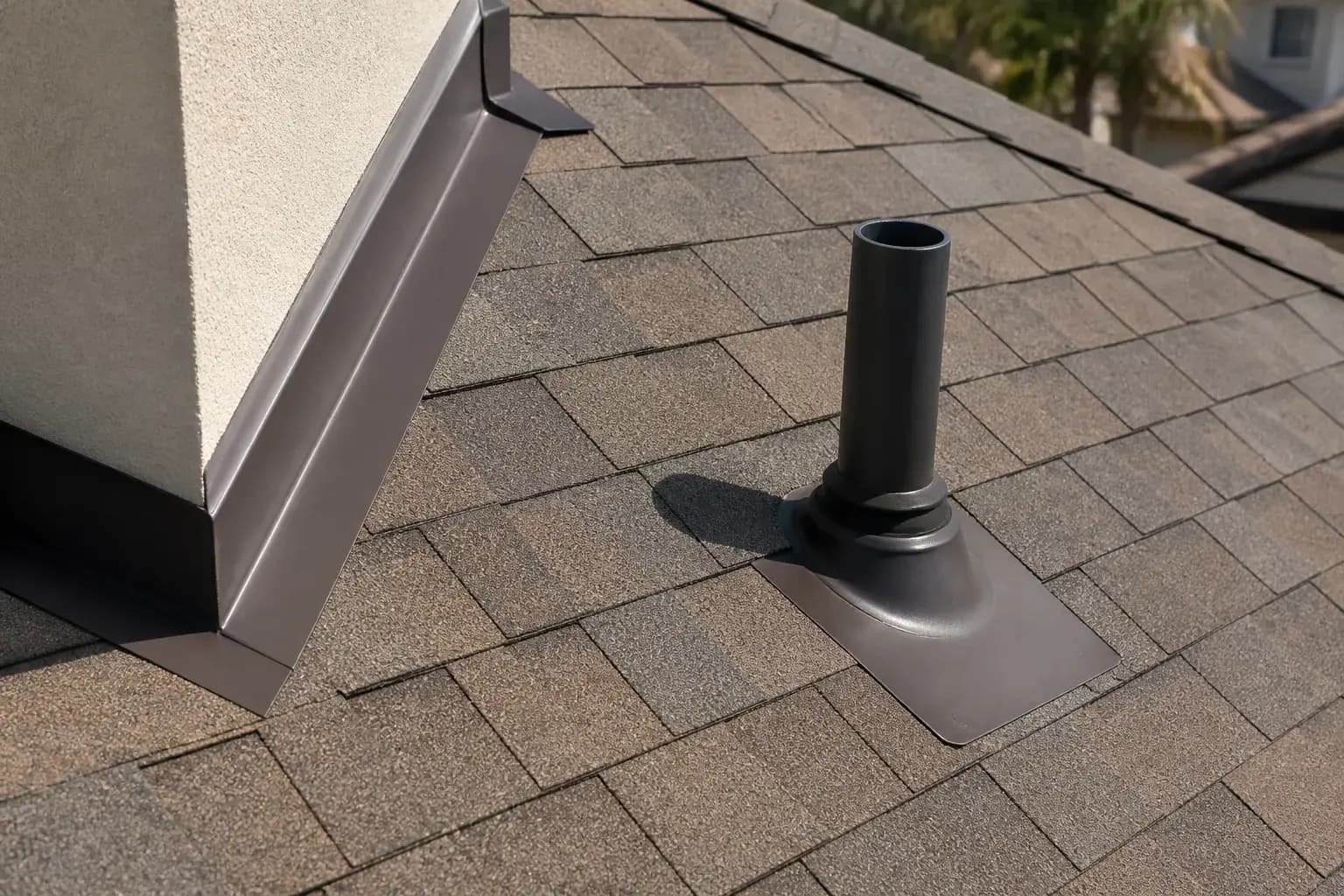
- Penetration openings: Areas around vents, pipes, and other roof penetrations often leak when seals weaken or shift.
- Improper runoff path: Water that pools or moves too slowly in one area can find a weak spot and enter the assembly.
- Storm-related movement: Wind and rain can loosen vulnerable areas, even if the damage is not obvious from the ground.
A good leak search is about tracing how water moved, not just scanning for the most visible flaw. That is why the right next step is not always a patch. It is identifying the source with enough accuracy to make the repair count.
How we trace leaks
Harbor View Roofing approaches leak detection with a methodical search that focuses on symptoms, likely entry points, and the path water followed inside the roofing system. We start with the reported area, then work outward to find the point where water is most likely entering.
1. Inside clues
We look at where the stain, drip, or dampness appears inside the home and use that information to map the probable route water took through the structure.
2. Exterior review
We check the roof surface, edges, transitions, and roof penetrations for visible signs that line up with the interior pattern.
3. Source narrowing
We compare the inside and outside evidence so the suspected opening is reduced to a specific area instead of a broad section of roof.
4. Repair direction
Once the source is identified, we can explain what needs attention and why that spot is the one to address first.
This process matters because leaks often travel along framing, under roofing layers, or through small openings before becoming visible. A precise search helps prevent repeat water intrusion and avoids chasing the wrong area.
What to do now
If you are trying to decide whether the problem is serious enough to call for help, a few simple steps can keep things from getting worse while you wait for the source to be found.
- Contain the moisture: Place a bucket or towel where water is collecting so the interior damage stays limited.
- Keep notes: Write down when the stain appeared, whether it changed after rain, and which room shows the symptoms.
- Avoid guesswork repairs: Smearing on a temporary fix in the wrong place can make the source harder to track later.
- Check the pattern: If the same area gets wet more than once, the leak is likely still active.
- Look for nearby clues: The stain inside may be telling you to look at a nearby roof edge, vent, or transition rather than the center of the room.
If you are unsure where the water is coming from, that is exactly when a focused leak search helps most. Harbor View Roofing can step in, sort through the clues, and help you move from uncertainty to a clear plan.
What affects the search
Not every leak behaves the same way, and several factors can make the source harder to spot. Understanding these details helps homeowners know why some problems need a closer, more careful look.
- Hidden travel paths: Water can run along wood, under layers, or down a slope before appearing indoors.
- Multiple weak points: A leak can start in one place and reveal itself somewhere else, especially if more than one area is vulnerable.
- Dry weather gaps: Some openings only show up when conditions are right, which can make a leak seem intermittent.
- Interior timing: Water may take time to show inside, so the visible damage can lag behind the actual entry.
In San Diego, homeowners often notice that a leak appears to come and go, but that does not mean it is solved. It usually means the opening is small, variable, or hard to see until water reaches the same route again.
Why fast action matters
A small leak can become a bigger repair issue when water stays trapped in hidden places. Even a slow intrusion may lead to stained finishes, damp insulation, and damage around framing if it keeps repeating.
The benefit of early leak detection is not just spotting water sooner. It is finding out where the moisture is entering before the surrounding materials become harder to restore. When the source is found early, the repair can be more direct and the interior damage can often be kept more limited.
Harbor View Roofing works to identify the cause before homeowners start making assumptions based only on the stain location. That saves time, reduces trial-and-error repairs, and gives you a clearer understanding of what needs attention.
Homeowner questions
How can I tell if the stain is from the roof?
A roof-related stain often changes after rainfall, reappears after drying, or is paired with attic moisture or a faint drip sound. If the stain keeps returning, it is worth having the roof source checked.
Why does the wet spot show up away from the leak?
Water often travels along framing, under roofing layers, or across surfaces before it reaches the inside ceiling or wall. The place you see it is not always the place it entered.
Can a small leak matter?
Yes. A small opening can still send water into hidden areas, especially if it repeats over time. Even limited moisture can create larger repairs if it is left untracked.
What information should I have ready?
It helps to know when you first noticed the issue, whether it appears after rain, and which room or ceiling section is affected. Photos of the stain over time can also be useful.
Will the leak source be obvious from the ground?
Not always. Some openings are too small or too tucked away to spot from below, which is why a closer look is often needed to connect the inside symptoms with the outside area.
What if I already tried a patch?
That can still be okay, but mention it when you call Harbor View Roofing. A previous patch may have changed how the water moves, and that information helps narrow the search faster.
Request a search
If you are seeing signs of a roof leak and want the source found before the damage spreads, Harbor View Roofing is ready to help. We focus on tracing the problem to the right area so you can move forward with a clear understanding of what is happening above your home.
For homeowners in San Diego, that means less uncertainty and a better chance of catching the issue before it turns into a larger interior repair. Reach out when the clues start adding up, and let us help you find where the water is getting in.
How We Work
A Clear Roofing Process
Every project starts with a careful look at the roof and a simple explanation of what comes next.
Inspect the Roof
We examine the roof surface, flashing, and likely trouble spots before recommending work.
Explain Your Options
You get a clear breakdown of what we found and which next step fits the situation.
Complete the Work
We finish the roofing project carefully and leave the site clean.
FAQ
Common Roofing Questions
If you have questions about your roof or next steps for a project, send us a message and we will help you sort through the options.
How do I know if my roof needs repair or replacement?
An inspection is the best place to start. We look at the condition of the roof and explain which option makes more sense.
What are signs my roof may be leaking?
Water stains, damp ceilings, missing shingles, and cracked flashing can all point to a roof issue.
Do you inspect roofs before starting work?
Yes, a careful inspection helps identify the source of the problem and the right scope of work.
Can you help with flat roofs?
Yes, flat roofing is one of the services we offer for local properties.
What types of properties do you work on?
We help homeowners, property managers, and business owners with roofing projects across San Diego.

Get started
Talk With a Roofing Team You Can Rely On
Tell us what is happening with your roof, and we will help you determine the right next step for repair, replacement, inspection, or maintenance.