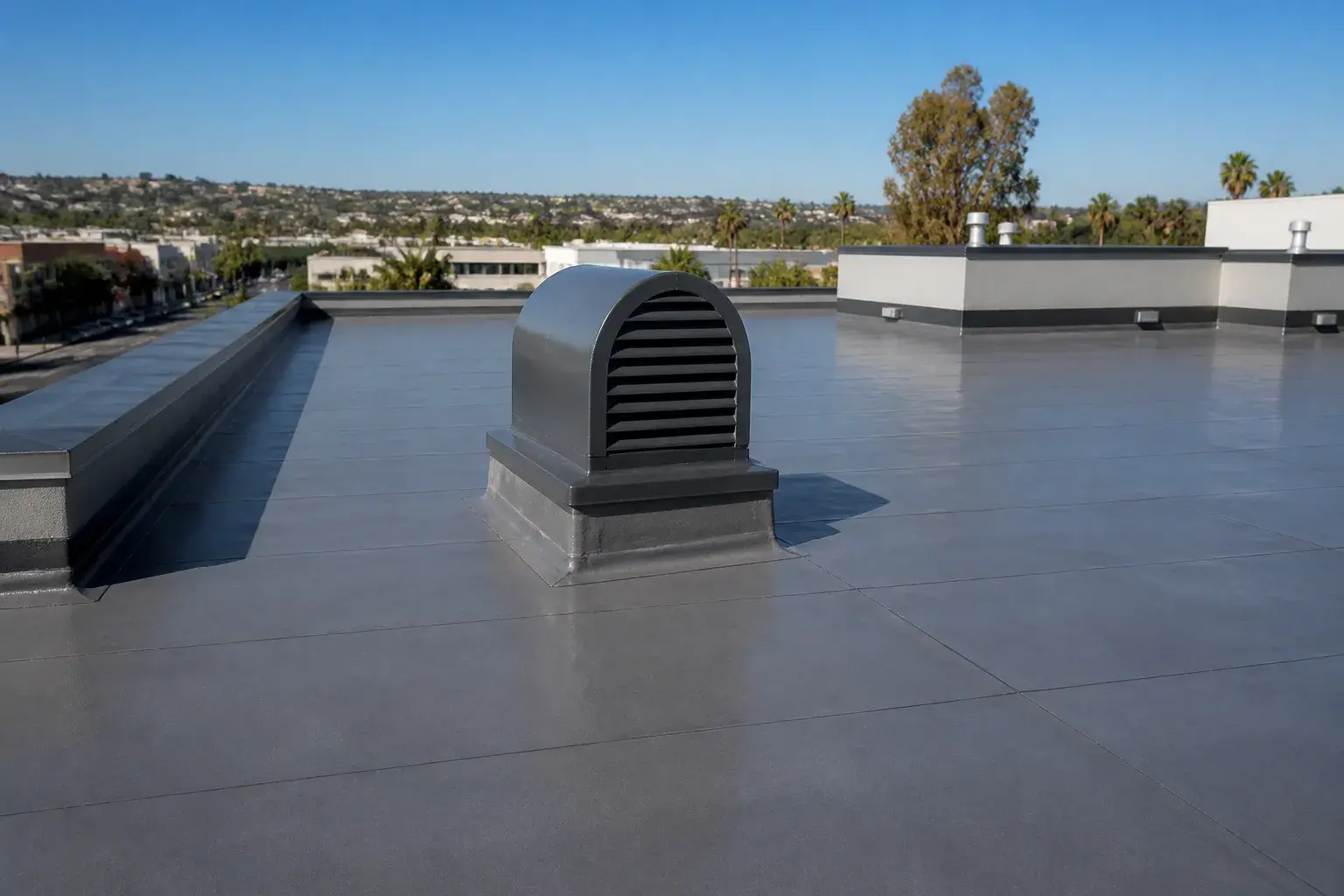
Flat Roofing in San Diego, CA
Pooling water and membrane wear can shorten the life of a flat roof.
If your flat roof is starting to show blisters, pooling water, or interior stains, it usually means the surface is no longer shedding water the way it should. Small issues on a flat roof can stay hidden for a while, then show up all at once after a rain or after water has had time to work into seams and flashing.
Harbor View Roofing handles flat roofing for property owners who want clear answers and a straightforward next step. We look at the roof surface, drainage points, seams, and edge details so you can understand what is happening and what needs attention before the damage spreads.
Warning signs
Flat roofs often give a few early clues before they fail. Watching for those signs helps you respond before damage moves inside.
- Standing water: Puddles that remain long after a storm can point to poor drainage or a sagging section.
- Bubbling or blistering: Raised areas in the membrane often mean trapped moisture or air beneath the surface.
- Open seams: Separated joints leave weak points where water can slip under the roofing layer.
- Interior staining: Discoloration on ceilings or upper walls can mean the roof has already started allowing moisture through.
- Cracked flashing: Damaged edge details and transitions are common leak points on flat roofing.
- Soft spots: Areas that feel spongy or uneven may suggest hidden damage below the top layer.
A flat roof can look calm from the ground while still having trouble at seams, drains, and low spots. When you notice one of these signs, it is time to get a closer look from Harbor View Roofing.
Common causes
Flat roofing has a simple appearance, but the details matter. Most problems start where water collects or where materials meet.
- Poor drainage: If water has nowhere to move, it lingers and puts stress on the roof surface.
- Aging seams: Seams naturally take a beating because they are the points most likely to separate first.
- Surface wear: Sun, foot traffic, and weather exposure can dry out or weaken the roofing membrane over time.
- Flashing failure: Areas around vents, edges, and transitions are vulnerable if flashing loosens or cracks.
- Previous patchwork: Repairs that were not tied into the surrounding material cleanly can create new weak spots.
Understanding the cause matters because flat roofing problems are rarely just about what you can see on top. Water can travel away from the original entry point, which is why a careful assessment is important before any repair work starts.
How we inspect
At Harbor View Roofing, we approach flat roofing by looking at the areas most likely to fail first. That means we do not just check the center of the roof and call it done.
Surface condition
We look for cracking, blistering, punctures, and other wear that can shorten the life of the roof surface. These details often show where water or sunlight has taken a toll.
Drainage points
We check low spots, drainage paths, and any area where water tends to linger. Even a small obstruction or slope issue can keep a roof wet longer than it should be.
Seams and edges
Seams, corners, and perimeter details deserve close attention because they are common failure points. When those areas start to separate, water can move underneath the roof layer.
Flashing and transitions
Roof edges, penetrations, and changes in material are checked for gaps or lifted sections. These transitions often tell the story of where a roof has started to struggle.
A good flat roofing assessment should show not only what is damaged, but also why it happened. That helps you make a practical decision instead of guessing at the next step.
Repair approach
The right repair depends on the condition of the roof, the location of the problem, and how far the issue has spread. Harbor View Roofing focuses on solutions that address the source of the leak, not just the visible symptom.
- Localized patching: Small punctures or isolated damage can sometimes be addressed by repairing only the affected area.
- Seam work: When the problem starts at a joint, the seam may need to be reopened, cleaned, and secured properly.
- Flashing repairs: Damaged flashing can be rebuilt or reinforced to help close off vulnerable transition points.
- Surface correction: If a low spot is holding water, we look at what can be improved to reduce repeated ponding in that area.
- Problem tracing: If moisture shows up inside, we work to follow the path back to the entry point instead of treating the stain alone.
Flat roofing repairs should be clean, deliberate, and matched to the roof type already in place. A rushed fix may hide the issue for a little while, but it usually leaves the underlying problem in place.
Material concerns
Flat roofs are built to perform under a constant challenge: moving water off a level surface. That means the material and the details around it need to work together.
Different flat roofing surfaces can show trouble in different ways. Some develop seam separation. Some blister from trapped moisture. Others wear thin in high-contact areas. Even if the roof still looks intact from a distance, the vulnerable spots are often at edges, around penetrations, and in areas where water sits too long.
When we evaluate flat roofing in San Diego, we look at how the roof is aging as a system. That includes the surface itself, the joints, the transitions, and any place water tends to collect. The goal is to understand whether the roof has a contained issue or a broader pattern of wear.
What to expect
If you contact Harbor View Roofing about flat roofing, the process starts with learning what you are seeing and how long it has been happening. From there, we focus on the roof areas most likely to be involved.
- Problem review: You explain the symptoms you noticed, such as stains, pooling, or visible surface damage.
- Roof assessment: We examine the roof surface, seams, flashing, and drainage details for signs of failure.
- Cause identification: We look for the source of the issue so the repair plan matches the actual problem.
- Repair discussion: You get a clear explanation of what needs attention and why that approach makes sense.
That process gives you a direct path from concern to action. For homeowners in San Diego, a clear evaluation can make the difference between a contained repair and a much larger issue later.
Homeowner tips
A few simple habits can help you notice trouble earlier and avoid letting a small issue grow.
- Check after rain: Look for standing water, new stains, or damp spots near ceilings and upper walls.
- Watch the edges: Pay attention to corners, seams, and flashing because those areas are common failure points.
- Notice changes: New soft spots, peeling, or bubbling usually mean the roof surface needs attention.
- Keep notes: If a leak seems to come and go, jot down when it happens and where you see it inside.
These observations help narrow down the problem when it is time to have the roof looked at. They also make it easier to explain what has changed and where the trouble started.
Common questions
How do I know if my flat roof has a leak?
Look for ceiling stains, damp drywall, bubbling paint, or musty spots indoors. On the roof itself, open seams, soft areas, or visible cracks are common clues.
Why does water sit on flat roofs?
Water can remain when the slope is too slight, a drain is blocked, or a section has begun to sag. Flat roofs are designed to move water, but they still need the right drainage path.
Can small roof blisters matter?
Yes. Blisters can point to trapped moisture or weakened materials beneath the surface. Even when they seem minor, they can lead to larger trouble if they spread.
What makes seams so important?
Seams are where roofing sections join, so they are natural weak points. If a seam opens or separates, water can get underneath the roofing layer more easily.
Why does the roof leak in one spot and stain somewhere else?
Water often travels before it shows up inside, which means the visible stain is not always directly below the entry point. That is why tracing the source matters.
What should I prepare before scheduling an assessment?
Have a short list of the symptoms you have seen, when they started, and where they appear inside. Photos of stains or roof trouble can also help Harbor View Roofing focus on the likely problem areas.
If your flat roof is showing signs of wear, Harbor View Roofing can help you figure out what is happening and what to address next. A focused look at the roof surface, seams, flashing, and drainage areas is often the fastest way to stop a minor problem from becoming a larger one.
How We Work
A Clear Roofing Process
Every project starts with a careful look at the roof and a simple explanation of what comes next.
Inspect the Roof
We examine the roof surface, flashing, and likely trouble spots before recommending work.
Explain Your Options
You get a clear breakdown of what we found and which next step fits the situation.
Complete the Work
We finish the roofing project carefully and leave the site clean.
FAQ
Common Roofing Questions
If you have questions about your roof or next steps for a project, send us a message and we will help you sort through the options.
How do I know if my roof needs repair or replacement?
An inspection is the best place to start. We look at the condition of the roof and explain which option makes more sense.
What are signs my roof may be leaking?
Water stains, damp ceilings, missing shingles, and cracked flashing can all point to a roof issue.
Do you inspect roofs before starting work?
Yes, a careful inspection helps identify the source of the problem and the right scope of work.
Can you help with flat roofs?
Yes, flat roofing is one of the services we offer for local properties.
What types of properties do you work on?
We help homeowners, property managers, and business owners with roofing projects across San Diego.

Get started
Talk With a Roofing Team You Can Rely On
Tell us what is happening with your roof, and we will help you determine the right next step for repair, replacement, inspection, or maintenance.